Choosing the Right Materials for CNC Projects

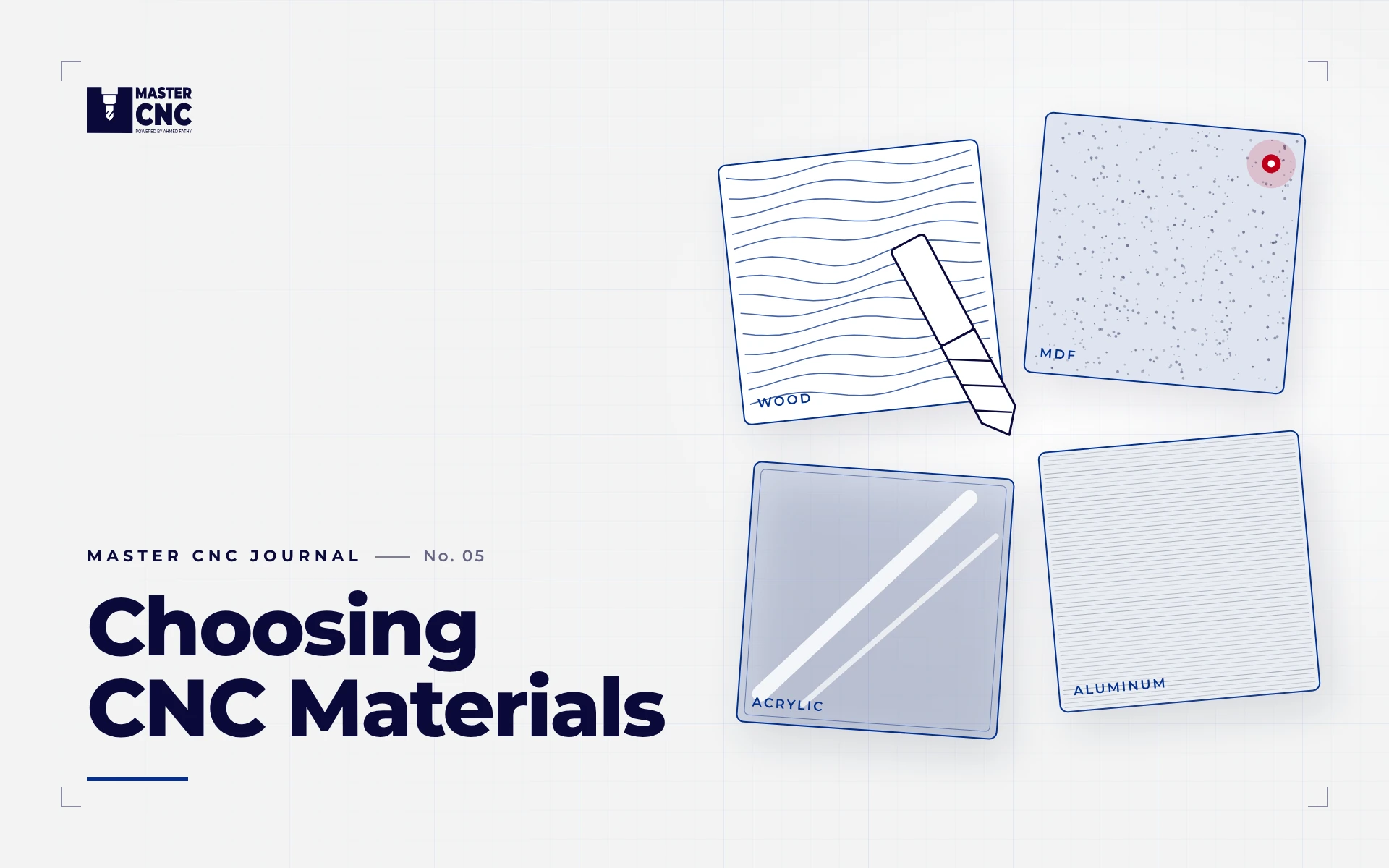
The same design can succeed or fail depending on the material it is cut from. A shelf that works well in plywood may sag in MDF. A carved panel that looks crisp in a fine-grained hardwood may tear out in a coarse softwood. Choosing the material is a design decision, not just a purchasing one.
This guide looks at the materials most often cut on CNC routers in furniture and décor work, what each one is good at, and what to watch for when machining it. The settings for each material depend on your machine, tools and spindle, so treat the advice below as a starting point and always test on your own setup.
Questions to ask before choosing
- What will the part do? Carry weight, look decorative, or both?
- Where will it live? Indoors, in a kitchen or bathroom, outdoors?
- How will it be finished? Painted, lacquered, veneered, left natural?
- What edges will be visible after cutting?
- What can your machine and tools cut well?
- What is the budget, and how much waste can the job afford?
The answers usually narrow the choice to one or two materials quickly.
Solid wood
Solid wood is the traditional choice for furniture: beautiful, repairable and strong along the grain. On a CNC it is used for legs, frames, carved panels, reliefs and solid tops.
What to watch for:
- Grain direction affects both strength and surface quality. Cutting across or against the grain can cause tear-out, especially in finishing passes.
- Wood moves with humidity. Wide parts expand and shrink across the grain, so joints and fixings must allow for it.
- Hardwoods and softwoods behave differently. Dense, fine-grained hardwoods usually hold detail better in carving; soft or coarse woods can fuzz or chip.
- Moisture content matters. Wood that is not dry enough can move or crack after machining.
Plywood
Plywood is made from thin layers of wood glued with alternating grain. It is stable, relatively light and strong for its weight, which makes it popular for cabinets, shelving and flat-pack furniture.
What to watch for:
- Edges show the layers. Some designs make this a feature; others need edge banding.
- Quality varies a lot. Better grades have fewer voids inside the layers, which matters for visible edges and for joints.
- The outer veneer is thin. Deep pockets can break through it, and chipping on the top face is common with a dull tool or an unsuitable cutter type.
- Thickness is often slightly different from the label. Measure before you design joints.
MDF
MDF (medium-density fibreboard) is made from fine wood fibres pressed with resin. It has no grain, cuts cleanly in every direction and has smooth faces that take paint well. That makes it a common choice for painted furniture, decorative panels, signs and templates.
What to watch for:
- MDF produces very fine dust. Good dust extraction and suitable respiratory protection are essential.
- It is heavy, and standard MDF does not like water. Moisture-resistant grades exist for damp areas.
- Screws hold poorly in the edges compared with plywood or solid wood, so plan the fixings.
- Long unsupported shelves in MDF can sag over time under load.
Acrylic
Acrylic (PMMA) is used for signs, light boxes, display parts and decorative inlays. Cast acrylic usually machines better than extruded acrylic, which tends to melt and gum up the cutter more easily.
What to watch for:
- Heat is the main problem. If the tool rubs instead of cutting, the plastic melts and welds back behind the cutter.
- Tools designed for plastics, usually single-flute cutters, and correct chip load help keep the cut clean.
- Keep the protective film on while cutting to protect the faces.
- Edges can be polished after cutting if a clear edge is needed.
Aluminium
Many routers can cut aluminium sheet and profiles when the machine is rigid enough and the right tools and settings are used. It is used for parts, fittings and decorative details.
What to watch for:
- Machine rigidity, spindle speed range and tool choice decide what is realistic. Light hobby machines may not be suitable.
- Chip evacuation and lubrication or cooling matter, because aluminium chips can stick to the cutter.
- Small depths of cut per pass are usually safer than deep cuts.
- Treat aluminium as a separate skill to learn and test carefully, not as "harder wood".
A simple comparison
- Strength and beauty for visible furniture: solid wood or good plywood.
- Painted parts with smooth faces and clean carving: MDF.
- Light, stable flat-pack panels: plywood.
- Transparent or coloured decorative parts: acrylic.
- Metal fittings and parts: aluminium, if your machine is suitable.
Always test first
Every material batch, tool and machine combination behaves a little differently. Before a full job, cut a small test piece with the same tool and strategy. Check the edge quality, the surface, the real thickness and how joints fit. Adjust and test again. A few minutes on scrap can save a full sheet.
And always follow the safety rules for your machine and workshop: dust extraction, eye and hearing protection, secure hold-down and never leaving a running machine unattended.
What to learn next
To design panels, carvings and reliefs and prepare their toolpaths for the router, start with ArtCAM 2D and continue with ArtCAM 3D. For furniture parts in wood with rotary work, PowerMill 4-Axis CNC Machining for Wood covers 4-axis machining from basics to production.
Choose the material with the design
The right material makes the design easier to cut, assemble and live with. Explore the Master CNC courses to learn how design, material and toolpaths work together.